

NOW MAKE IT MAKE SENSE.
THESIS THINKING
YOU DON'T NEED MORE IDEAS.
YOU NEED TO TIE YOURS TOGETHER.
You already have ideas. This shows you how to bring them together into one clear, focused argument - so your essay makes sense from start to finish.
Best used after Essay Relief or once you have a clear direction

THESIS THINKING ISN'T FOR EVERYONE.
IT'S ONLY FOR YOU IF ...
you start writing - then stop because something feels off - but you can't explain what
you keep circling the same idea without actually moving your argument forward
you start to wonder, "Do I even have an argument?"
you write a paragraph and think, What did I even just say?
you have ideas - but you don't know how they connect
your essay feels like it's all over the place and in a bunch of bits and pieces
ONE HEAD NOD = MADE FOR YOU.
MORE THAN ONE? = DEFINITELY MADE FOR YOU.
THIS ISN'T HOW THESIS WRITING IS USUALLY TAUGHT.
AND THAT'S EXACTLY WHY I DID IT THIS WAY.
It's NOT a definition and a couple examples.
-
You don't need another explanation of what a thesis is. You need to know how to build one that holds your essay together.
It's NOT pages of vague advice.
-
"Make it clear." "Be specific." That sounds helpful - until you sit down to write and have no idea what to do with it.
It's NOT logic jargon and technical terms.
-
You don't need to learn about premises, conclusions and fallacies just to write a strong, structured argument
BECAUSE KNOWING WHAT A THESIS IS ISN'T THE PROBLEM.
THIS IS ABOUT HOW TO THINK -
SO YOU CAN SAY SOMETHING.
(SIMPLE AS THAT.)
YOU'LL LEARN HOW TO:
shape your ideas into something that actually makes sense
recognize when your argument is weak (and why)
and build a thesis that actually supports everything you write
Because once you can see what your writing is doing, you can actually fix it.
That's why I don't just show you examples - I show you patterns, language, and real ways to catch what's not working.
You'll get to recognize things like the thesis that sounds good - but says nothing. Or the one that looks clear - but falls apart halfway through your essay.
YOU DON'T NEED TO READ MORE OR COME UP WITH MORE IDEAS.
You just need to know how to tie the ones you have together - and that's what Thesis Thinking does.
WHAT YOU LEARN
INSIDE THESIS THINKING
The short answer? A lot of things you don't learn about writing in school or on Google - like...
THE 7 TYPES OF HARMFUL THESIS STATEMENTS
...and how to fix them before they cause you problems.
I'LL INTRODUCE YOU TO:
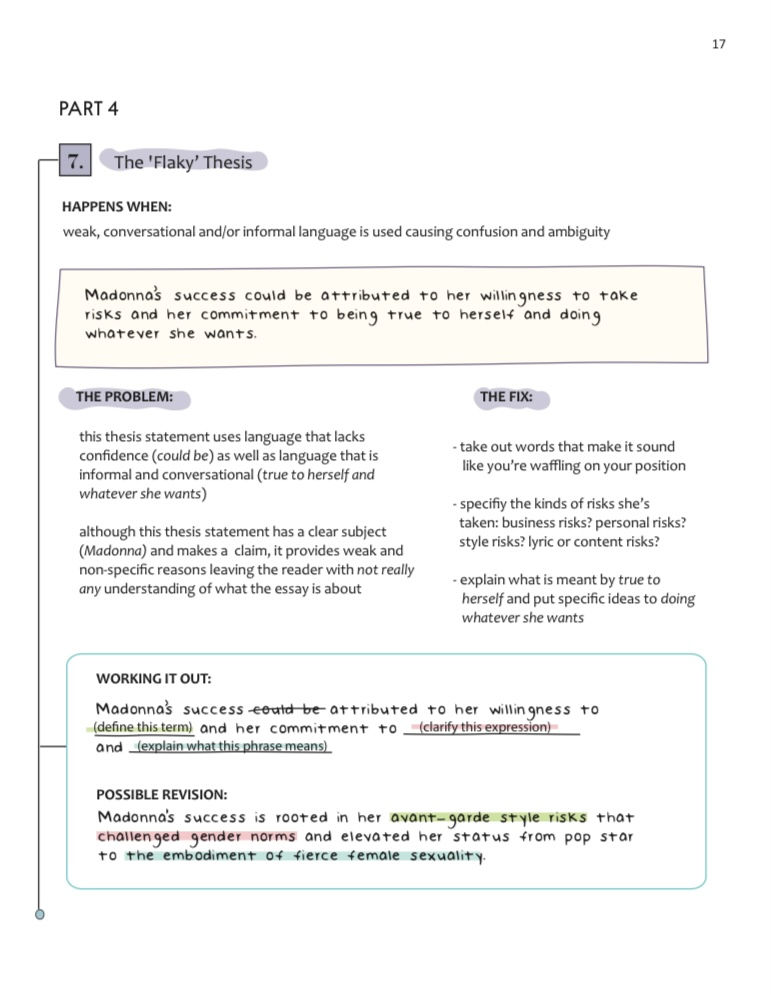
* The Flaky Thesis *
the one that sounds good...but doesn't actually say anything
* The Overstuffed Thesis *
the one that tries to say everything at once - and ends up confusing everyone
* The Safe Thesis *
the one that's technically correct...but doesn't make a real argument
* The Half-Baked Thesis *
the one with lots of potential but needs you to sit with your thoughts just a little longer
NOT ALL THESIS STATEMENTS TAKE YOU WHERE YOU NEED TO GO.
BUT - when you can name what your thesis is doing, you can actually fix it.
BUT - THAT'S NOT ALL YOU LEARN
INSIDE THESIS THINKING
YOU ALSO LEARN HOW TO:


turn scattered ideas into a structured, unified argument
connect your points so your argument builds and you actually arrive at a conclusion
(not just write, "In conclusion..." )
write a thesis statement that can support everything that follows
write a thesis that will work for any type of essay - not just one specific kind
move beyond the "list 3 arguments" thesis statement you learned in 9th grade
Once this clicks, writing your essay becomes a lot more straightforward.
Because you're not trying to figure out what you say at every sentence -
you're building something that makes sense from sentence one.
WHAT STUDENTS JUST LIKE YOU ARE SAYING
"My teachers never explained things like that. It made a big difference."
- 1st year university student
"new explanations" - not like something he's seen before and it had a big impact
"I keep your guide open on my desktop and go back to it all the time."
- 4th year university student
"go back to it all the time" - it's not a one-and-done guide; she uses it on repeat!

"support in any kind of writing" - she's used it for YEARS in all different classes and writing assignments because the thinking skills are transferable
AND - HERE'S WHAT YOU ACTUALLY GET
INSIDE THESIS THINKING
The 5 ways to structure a thesis (based on your essay type) - so you can write any type of essay
All 7 harmful thesis types with examples and fixes - to stop your essay from spiralling out of control
Real thesis breakdowns (good, bad & revised) - that you can use to evaluate your own thesis
The most common mistakes to watch out for - and how to correct them when you spot them
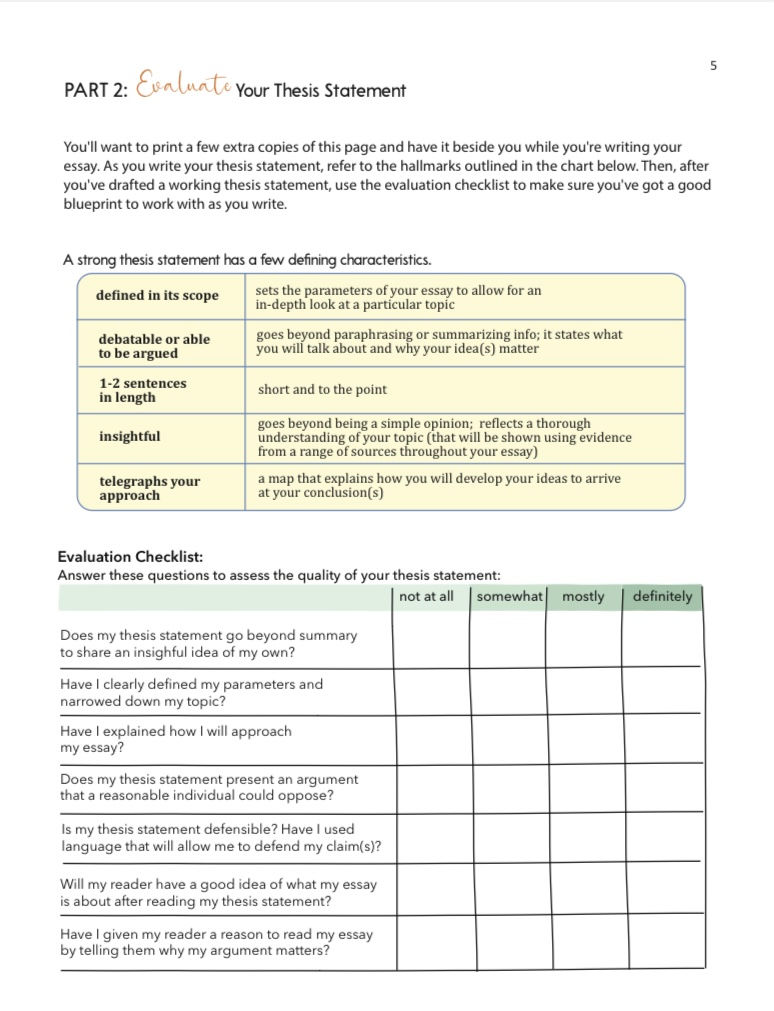
A step-by-step way to test if your thesis actually works (I call it a thesis calculator) to get immediate feedback
Practice questions + answer key to fast-track your learning
This isn't just about writing one sentence.
It's about learning how to write a 1 -2 sentence argument that ties every idea together and your entire essay depends on.
CURIOUS TO SEE WHAT IT LOOKS LIKE
WHEN YOUR IDEAS START TO MAKE SENSE?
[ real pages from the tutorial ]
TAKE A PEEK!
LET'S ANSWER SOME
F A Q
BECAUSE, IF YOU'RE LIKE ME - YOU ALWAYS HAVE QUESTIONS
Do I need Essay Relief before this?
What if I don't even have a thesis yet?
Is this just about writing one sentence?
How is this different from what I've already learned in school?
Will this help if I tend to overthink?
Not necessarily.
If you're struggling to figure out what to say, start with Essay Relief. If you already have ideas but can't organize them into an argument - this is exactly what you need.
Even better!
This will actually help you build one from the ground up. And - this tutorial works best when you work through it - not just read through it.
Nope.
Your thesis is one sentence - but it controls your entire essay. If it was a car, it would be the steering wheel. It's the one sentence responsible for making sure every idea works together to make one central argument.
It shows you how to think through a thesis.
Most thesis advice sounds like, "Make it clear," Be specific," and "Make it arguable." That may be true, but it's not helpful to when you have to write one. This shows you how to actually build a thesis - and how to fix it when it's not working.
Yes - especially then.
Overthinking usually happens when you have too many ideas and no clear structure. This gives you a way to organize your thinking so you can move forward instead of getting stuck.
How long will this take to go through?
About an hour or two.
You can probably read through it in about an hour - but if you complete the mini-workbook it'll probably take you closer to two hours. You can also come back to it anytime you're writing an essay - it's designed to be something you actually use, not just read once.
Will this really make writing easier?
Because it fixes problems before they start.
Writing is hard when you try doing things too late. This changes what happens before you start. It makes sure your paragraphs have direction, your ideas connect and your essay doesn't feel like something you're figuring out as you go.
If your thesis is unclear, your essay will be too.
Build one that actually works.